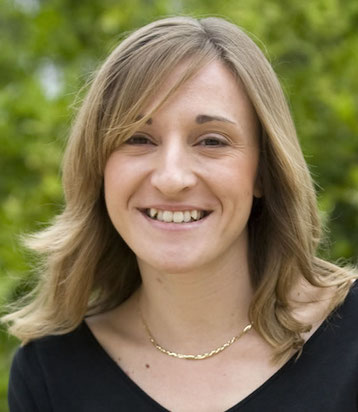
Susan E. Martonosi

Assistant Professor

Department of Mathematics

Harvey Mudd College

301 Platt Blvd.

Claremont, CA 91711

martonosi @ math . hmc . edu

(909) 607-0481


On Sabbatical at Cornell University, School of Operations Research and Information Engineering

July – Dec. 2008


My CV


Education

Massachusetts Institute of Technology

Operations Research Center

Cambridge, MA

Ph.D. 2005


Cornell University (Go Big Red!)

College of Engineering

School of Operations Research and Industrial Engineering

Ithaca, NY

B.S. 1999


Teaching

If you are an instructor and would like to see my course syllabi or other teaching materials, please feel free to contact me.

Some Study Suggestions

Math 187 – Introduction to Operations Research: Fall 2007, Fall 2006

Math 159 – Design and Analysis of Experiments: Spring 2007 (second half)

Math 158 – Linear Statistical Models: Spring 2008 (second half), Spring 2006 (second half)

Math 157 – Intermediate Probability: Spring 2009 (first half)

Math 63 – Linear Algebra II: Spring 2009 (first half), Spring 2008 (first half), Spring 2007 (first half), Spring 2006 (first half)

Math 62 – Introductory Probability and Statistics: Fall 2007 (Second half), Fall 2006 (Second half), Fall 2005 (Second half)

Math 12 - Linear Algebra I and Discrete Dynamical Systems: Fall 2005 (First half)


Research

My research focuses on the application of operations research models and methodology to problems in homeland security.  My earlier work developed probabilistic models to guide aviation security policy related to passenger and cargo screening and shipping container screening policy.  My more recent work moves away from examining individual security measures to focus on systematic approaches to security.  I use game theory, social networks analysis and graph theory to solve problems in resource allocation and terrorist network disruption.


A. Optimal Security Resource Allocation to Defend Multiple Targets from Terrorist Attack

Many homeland security models focus on system reliability in the event of an attack and neglect deterrence: terrorists might choose not to attack or might shift their focus to less desirable targets if the costs of attack become too high relative to the benefits.  This project develops models for resource allocation in which a defender must invest limited resources in protecting several targets, knowing that the attacker will respond either by attacking a subset of those targets with heightened effort or by giving up.   I have worked with three Harvey Mudd College undergraduates on this project: Daniel Walton (now a Ph.D. student in mathematics at UCLA) studied the single-target problem as a summer research assistant, Eugene Quan (now employed at Citadel Investment Group) examined the two-target problem with budget constraints for his senior thesis in mathematics, and Tim Sweda (a senior engineering major) researched special cases of both problems as a summer research assistant. 


B. Disrupting Terrorist Networks

Large Islamic terrorist organizations, such as al Qaeda, form complex social networks of operatives connected in time and space.  Understanding the structure of these networks from a graph theoretic perspective can help the United States decide how best to attack terrorist networks to disrupt the organization.  I consider the question of how to attack a network in order to increase the visibility, and therefore the accessibility, of a specific key member of a network.  I have worked with three Harvey Mudd College undergraduates on this project: Michael Ernst (entering a Ph.D. program in philosophy at UC Irvine) and Sean Plott (entering a Ph.D. program in Interactive Media at USC) researched the effect of removing certain nodes from a graph on the centrality of a specified key node; David Lapayowker (currently a senior computer science major) examined the relationship between minimum cuts of a graph and nodes having centrality. 


I have also conducted research with the RAND Corporation as a summer associate (Jun-Aug 2004), examining the feasibility of screening options for shipping containers at US ports. 


My broader interests are in using operations research for problems in the public interest, such as health, education, environment and public safety.


Publications

“How Effective Is Security Screening of Airline Passengers?”, Interfaces (a journal of INFORMS, the Institute for Operations Research and Management Science) special issue on Homeland Security Applications (with Arnold I. Barnett), 2006.

“Evaluating the viability of 100 per cent container inspection at America’s ports”, The Economic Impacts of Terrorist Attacks,  H. W. Richardson, P. Gordon, J. E. Moore II (eds.). Edward Elgar Publishing, 2005. (with Henry Willis and David Ortiz)

 “An Operations Research Approach to Aviation Security”, Ph.D. Thesis, MIT 2005

“Terror is in the Air”, Chance (a journal of the American Statistical Association), Spring 2004. (with Arnold I. Barnett)


Personal

Between undergraduate and graduate school, I was a volunteer in the United States Peace Corps, teaching high school math in Guinea, West Africa.   Click here for some photos/description


At MIT, I was a member of Rambax MIT, a Senegalese sabar drumming ensemble.


I also like to swim, run, play the piano and sing karaoke.